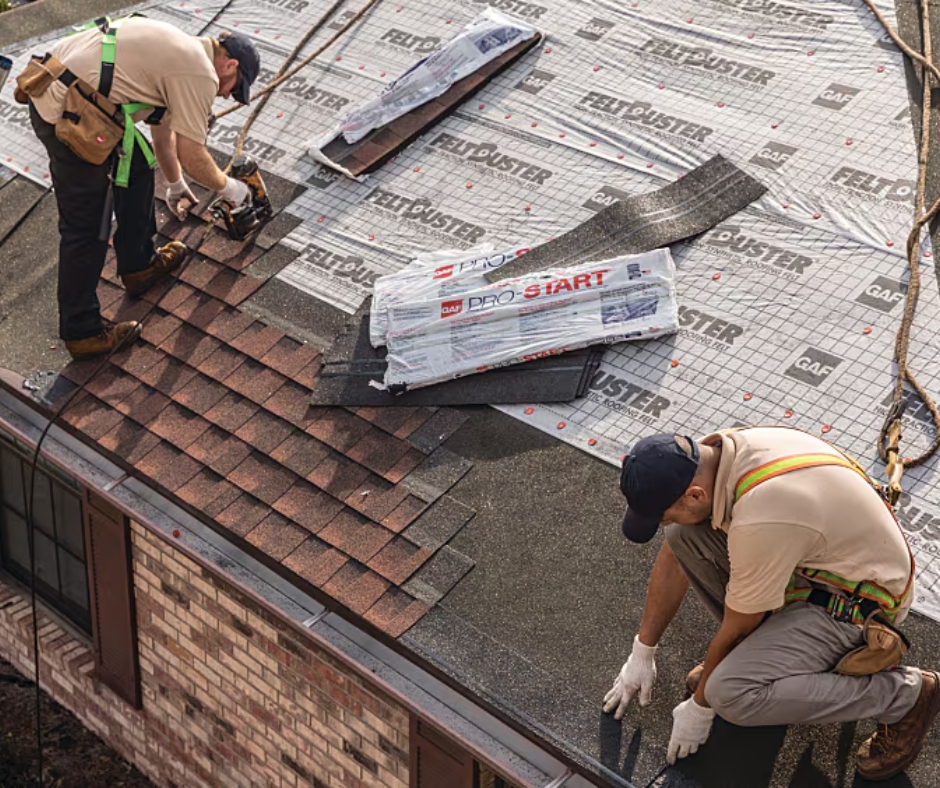
Why We Start With Age, Not Shingles
Before our crew looks at a single shingle on a Home Place roof, we ask one question: how old is it? That answer tells us more than a surface glance ever will, because asphalt shingles wear out on a schedule. A roof can look rough at ten years because the attic underneath it runs hot, and it can look passable at twenty five while the sealant strips that hold it together have quietly given up. Age sets the expectation, and everything we see on the roof either confirms it or explains why the roof is aging faster than it should. When a homeowner can tell us the install year, we already know whether we are likely talking about a repair, a few more years of monitoring, or a replacement, before we ever set a ladder.
The Signs That Actually Tell Us a Roof Is Done
Plenty of warning signs are repairable on their own. The ones that tell us a Home Place roof is genuinely finished are the ones that show up everywhere at once. Granule loss is normal until you start seeing bare patches where the black asphalt mat is exposed, and once UV is hitting that mat directly, the shingle degrades fast from there. Curling and cupping mean the same thing across the whole roof, because the causes, age, heat, and weak attic ventilation, act on every shingle, not just the few you can see. Shingles that keep blowing off in ordinary wind tell us the sealant strips have failed across the field, and once that happens, individual repairs rarely hold for long. And a sag in the roofline is the one sign we never treat as cosmetic, because it points to rotted decking or a structural problem underneath that only gets worse. None of these is a single bad spot. Each one is the roof telling us the system is at the end of the line.
What an Honest Assessment Looks Like
When we assess a Home Place roof, we are not hunting for a reason to sell a replacement. We are answering one question: where is this roof in its life, and what does it actually need right now? That means we look at age and history, walk the field for shingle and flashing condition, check the attic for moisture and ventilation, and weigh repair against replacement on the real math, not on what pays us the most that week. Sometimes the answer is a four hundred dollar repair and a note to watch a valley. Sometimes it is a tear off that should have happened a year ago. Either way, you get photos of what we found and a plain explanation of why we are recommending what we are recommending. That honesty is the entire reason Home Place Roofing has the Home Place reputation it does, and it is why so much of our work comes from neighbors telling neighbors. If your roof has good years left, we would genuinely rather tell you that and earn the replacement when you actually need it.
Where Your Roof Is in Its Life
It helps to think of an asphalt roof as moving through phases rather than simply being good or bad. In the first several years it performs at its peak and needs little beyond clean gutters and a look after big storms. Through the middle years it weathers slowly and handles the occasional repair without trouble. Somewhere past the midpoint, granule loss starts to accelerate and the occasional repair becomes more frequent, which is the moment to start planning rather than reacting. By the end of the window the warning signs multiply and the math tilts clearly toward replacement. Knowing which phase your Home Place roof is in is what lets you plan financially instead of being caught by an emergency.
Why Waiting Past the Window Costs More
The instinct to squeeze a few more years out of an old roof is understandable, and it usually backfires. The reason is secondary damage. A roof replaced before it leaks is just a roof. A roof replaced after water has been getting in drags drywall, paint, insulation, and sometimes mold and structure along with it, and that part is rarely covered the way a clean replacement would be. We have watched this pattern play out across hundreds of Home Place projects, and the numbers tell the story plainly.
| Scenario | Roof | Interior Damage | Total |
|---|---|---|---|
| Proactive replacement at year 22 | $15,000 | $0 | $15,000 |
| Reactive replacement at year 27 after a leak | $15,000 | $5,000 | $20,000 |
| Emergency replacement at year 30 after a major leak | $16,500 | $15,000 | $31,500 |
The roof itself barely moves. What moves is everything the water touched on the way in, plus the rush pricing that comes with an emergency. Waiting almost never saves money once secondary damage enters the picture, and by then the timeline is no longer yours to control.
Why Home Place Weather Is Hard on Roofs
Home Place roofs face more total stress than roofs in milder parts of the country, and it shows up in the replacement timeline. Hail events bruise and fracture shingle mats. High winds work at the sealant strips and lift tabs. The freeze-thaw swings of an Home Place winter expand and contract everything on the roof, and ice can back up at the eaves and force water under the shingles. None of this is unusual here, and all of it pushes roofs toward the earlier end of the manufacturer's expected range. It is why a roof that might last the full thirty years in a gentle climate often reaches its replacement window sooner in Home Place, and why we lean on age and condition together rather than on the number printed on the shingle wrapper.
What We Will Not Do
There are a few things we will not do on a Home Place roof, and they are worth saying plainly. We will not push a tear off on a roof with real life left, because that is a sales tactic rather than a service. We will not patch a roof that genuinely needs replacing just to take the smaller invoice, since that leaves you paying twice. And we will not lay new shingles over an unaddressed ventilation or decking problem, because that guarantees an early repeat. Telling a homeowner the honest answer, even when it is the smaller job or no job at all, is the whole reason our Home Place work comes from referrals.
When a Young Roof Ages Too Fast
Every so often a Home Place homeowner is frustrated that a roof barely past ten years already looks tired, and the answer is almost never the shingles themselves. The usual cause is the attic. A roof with weak ventilation traps heat and moisture underneath, and that heat bakes the shingles from below, taking years off a roof that should still be in its prime. Poor original installation is the other common cause, from nails driven in the wrong place to ice and water shield that was skipped where it was needed. The reason we chase the underlying cause matters: a new roof laid over the same airflow or installation problem will fail early in exactly the same way. So when we see a young roof aging fast, we look in the attic before we look at materials.